
On November 16, 2021, the Ministry of Industry and Trade issued Official Letter 7268/BCT-DB notifying the effective date of the Regional Comprehensive Economic Partnership (RCEP).
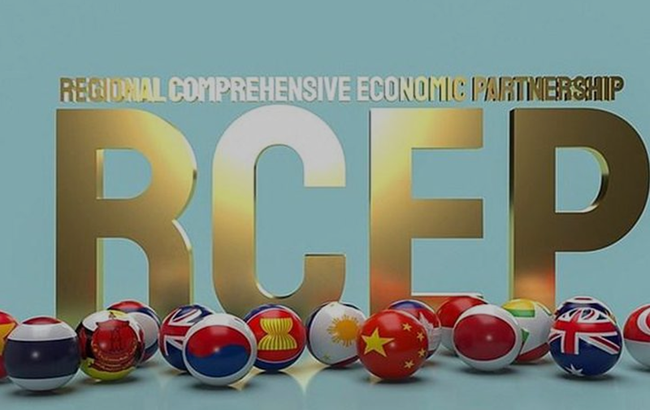
By November 2, 6 ASEAN countries (including Vietnam) and 4 partner countries had deposited their instruments of ratification/ratification of the Regional Comprehensive Economic Partnership (RCEP) to the General Assembly. ASEAN Secretary, Therefore, the RCEP Agreement will officially come into force from 1 January 2022 RCEP is expected to help create a stable and long-term export market for ASEAN countries in general and Vietnam in particular.
The Ministry of Industry and Trade said that RCEP was signed by 10 ASEAN member countries and 5 ASEAN partner countries, China, Japan, Korea, Australia, and New Zealand on November 15, 2020, on the sidelines of the 37th ASEAN Summit hosted by Vietnam.
Therefore, promoting the conclusion of the negotiation and signing of the RCEP Agreement in the year that Vietnam is the ASEAN Chair is an achievement that is highly appreciated by ASEAN countries and partners, thereby confirming Vietnam's role and position in the area.
Under the RCEP, the agreement will officially enter into force 60 days after at least six ASEAN countries and three partner countries complete the ratification/ratification of the agreement deposits to the ASEAN Secretary-General.
By November 2, 2021, there were six ASEAN countries; In particular, Vietnam and four partner countries - China, Japan, Australia, and New Zealand - submitted their RCEP approval documents to the ASEAN Secretary-General. As such, the RCEP agreement will officially enter into force from January 1, 2022.
According to the Ministry of Industry and Trade, the entry into force of the RCEP Agreement from January 1, 2022, will contribute to the multiple connect of the Free Trade Agreements that ASEAN has signed with each of its previous partner countries, harmonizing commitments and provisions in these agreements, maximizing economic benefits, especially rules of origin and facilitating trade, contribute to strengthening regional supply chains and economic recovery following the COVID-19 pandemic.
Once fully effective for all signatories, the RCEP Agreement will form a market with 2.2 billion consumers, accounting for about 30% of the world's population, and GDP of about 26.2 trillion USD, equivalent to about 30% of global GDP and making it the largest free trade area in the world in terms of population size.
Thus, the RCEP Agreement is expected to help create a stable and long-term export market for ASEAN countries in general and Vietnam in particular, contributing to promoting the implementation of the policy of building an export-oriented production in Vietnam.
However, to exploit the benefits brought by the RCEP Agreement, according to experts, the first thing Vietnamese enterprises need to do is to carefully study the commitments of the Agreement, especially commitments related to their business sectors, such as the roadmap to cut and eliminate tariffs on goods of Vietnam and other participating countries. The agreement is a member of the agreement, the rules of origin of the Agreement, the commitment to open the market of services and investment, the provisions on customs procedures, and trade facilitation. In addition to the benefits, domestic enterprises also need to proactively grasp and prepare in advance about the adverse impacts caused by the RCEP Agreement, the increase in competition in the domestic market.
Collected from source